
Calibration at the Core
Calibration is at the heart of temperature metrology. For more than forty years, Isotech systems have been used in over 125 countries, from industrial facilities to the world's National Metrology Institutes (NMIs).
At this level, uncertainties of 0.001 °C — or even lower — are not abstract figures but practical necessities. Millikelvin stability underpins global trade, industrial safety, and scientific progress.
Yet calibration is only the beginning. Increasingly, the same levels of precision are required in fields as diverse as climate science, astronomy, and advanced industry.
Climate Research – Measuring Subtle Change

The climate system responds to shifts of just tenths or hundredths of a degree. Detecting those signals depends on millikelvin stability.
Astronomy – Revealing New Worlds
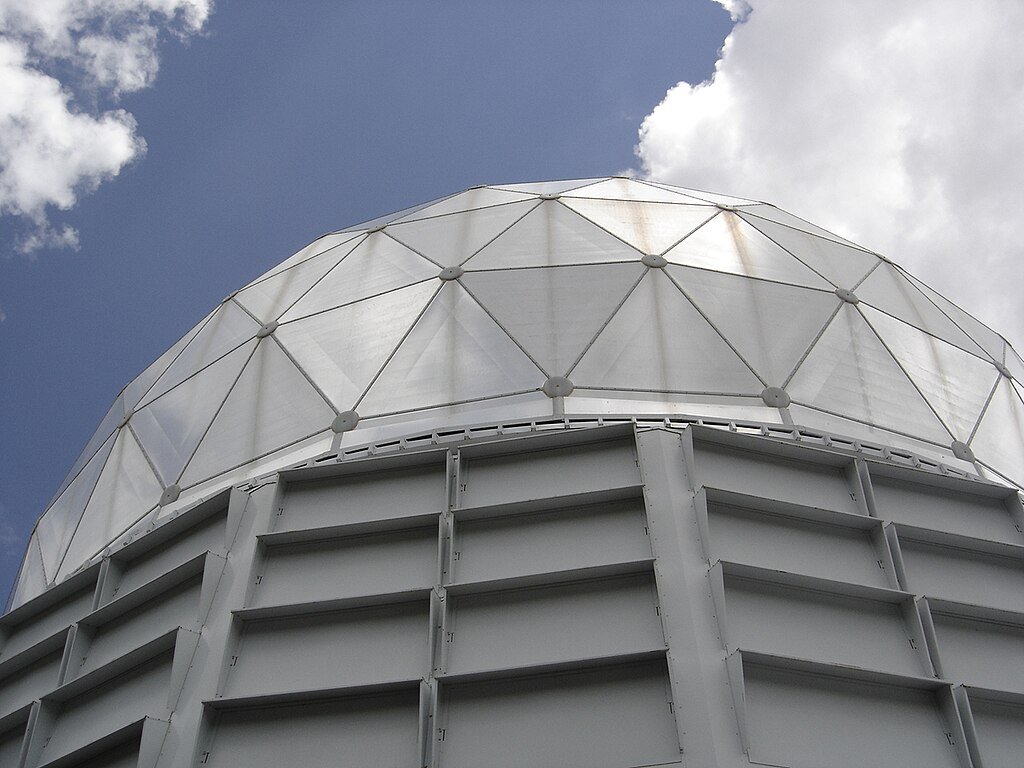
Astronomers must stabilise instruments at the millikelvin level to avoid confusing thermal drift with the faint wobble of a star caused by an orbiting planet.
High-Profile Applications
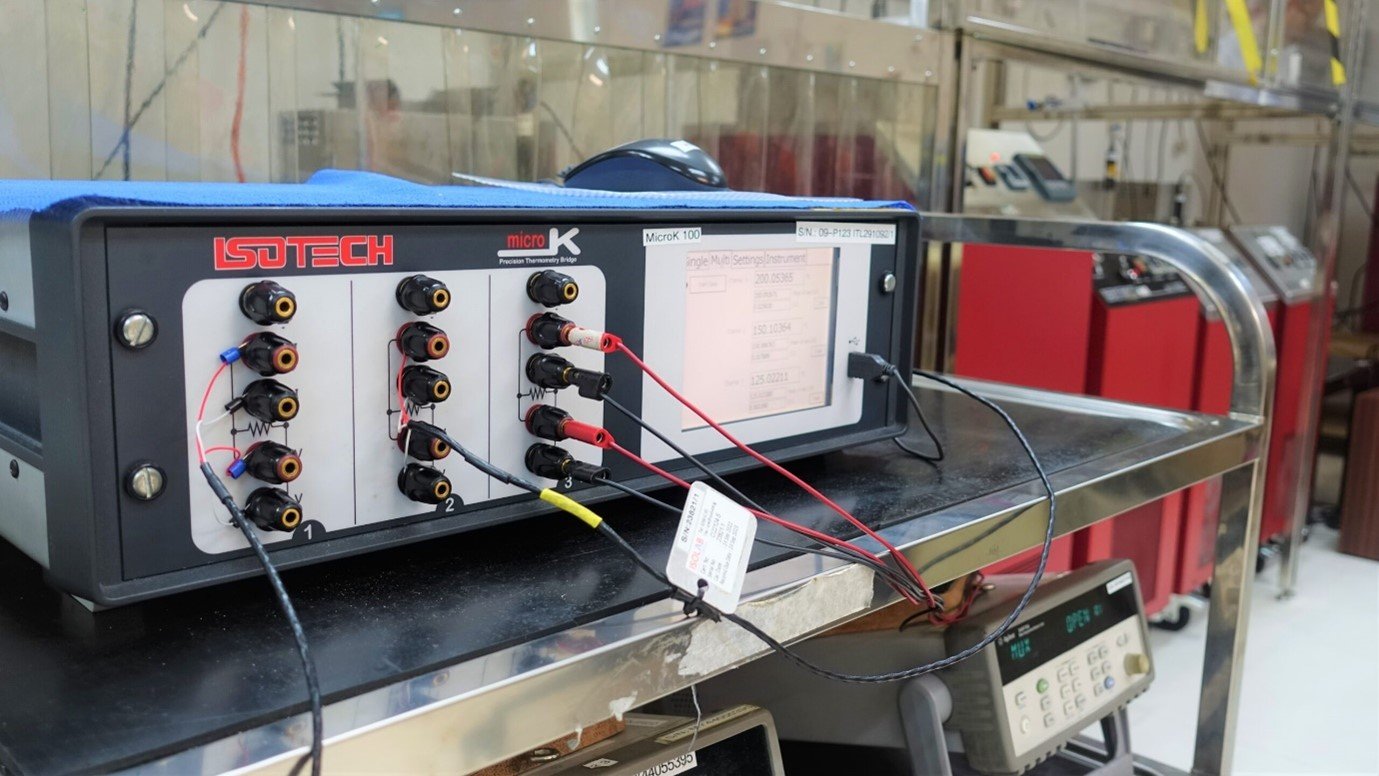
Millikelvin precision is essential across science and industry:
Industrial Precision – Driving Innovation & Quality

In advanced manufacturing and industrial processes, precise temperature control is paramount for product quality, efficiency, and safety. Isotech's solutions ensure critical thermal parameters are met.
- Semiconductor Manufacturing: Precise wafer processing temperatures for microchip reliability and yield
- Pharmaceutical Production: Exact temperatures for drug synthesis, storage, and stability testing
- Aerospace & Automotive: Critical component testing and material processing for extreme environments
- Energy Sector: Power generation efficiency, battery thermal management, and process control
Why Precision Matters
Why measure to 0.001 °C? Because at the frontiers of science and industry, this is the scale at which reality unfolds:
- In calibration, it ensures trust across 125+ countries
- In climate science, it reveals the ocean's hidden heat
- In astronomy, it enables the discovery of new worlds
- In industry and physics, it drives innovation and safety
This accuracy is not a luxury. It is essential.
Trusted Worldwide
Calibration remains our major business, but it is only part of the story. The same millikelvin accuracy that underpins NMIs is now vital for climate monitoring, astronomy, and advanced research.
The ability to measure to 0.001 °C is the quiet foundation of progress in science, industry, and our understanding of the universe.
Discover Isotech Precision
Explore how our precision thermometry solutions can support your most demanding applications.
Visit IsotechMentions of organisations, instruments, and projects are for identification and informational purposes only and do not imply endorsement or affiliation.
References
- Smith, D. et al. (2020). Sentinel-3 SLSTR pre-launch calibration. Remote Sensing, 12, 2510. https://www.mdpi.com/2072-4292/12/15/2510
- Woods Hole Oceanographic Institution. CTD Calibration Laboratory Standards. https://www.whoi.edu/science/PO/ctd/ctdcal1.html
- National Research Council & NIOZ. (2021). Metrological evaluation of deep-ocean thermometers. Journal of Marine Science and Engineering, 9, 398. https://www.mdpi.com/2077-1312/9/4/398
- Stefánsson, G. et al. (2016). Sub-millikelvin instrument stability for precise radial velocity measurements. The Astrophysical Journal, 833, 175. https://doi.org/10.3847/1538-4357/833/2/175
- Robertson, P. et al. (2019). Ultrastable environment control for the NEID spectrometer. Journal of Astronomical Telescopes, Instruments, and Systems, 5(1), 015003. https://doi.org/10.1117/1.JATIS.5.1.015003
- Mueller, M. et al. (2018). Precision thermal control of the GMT-Consortium Large Earth Finder (G-CLEF). Proceedings of SPIE, 10702, 10702A2. https://doi.org/10.1117/12.2314038
- BIPM. CCT-K7 Final Report: Key comparison of water triple point cells. https://www.bipm.org/documents/20126/41773843/CCT-K7-Final-Report.pdf